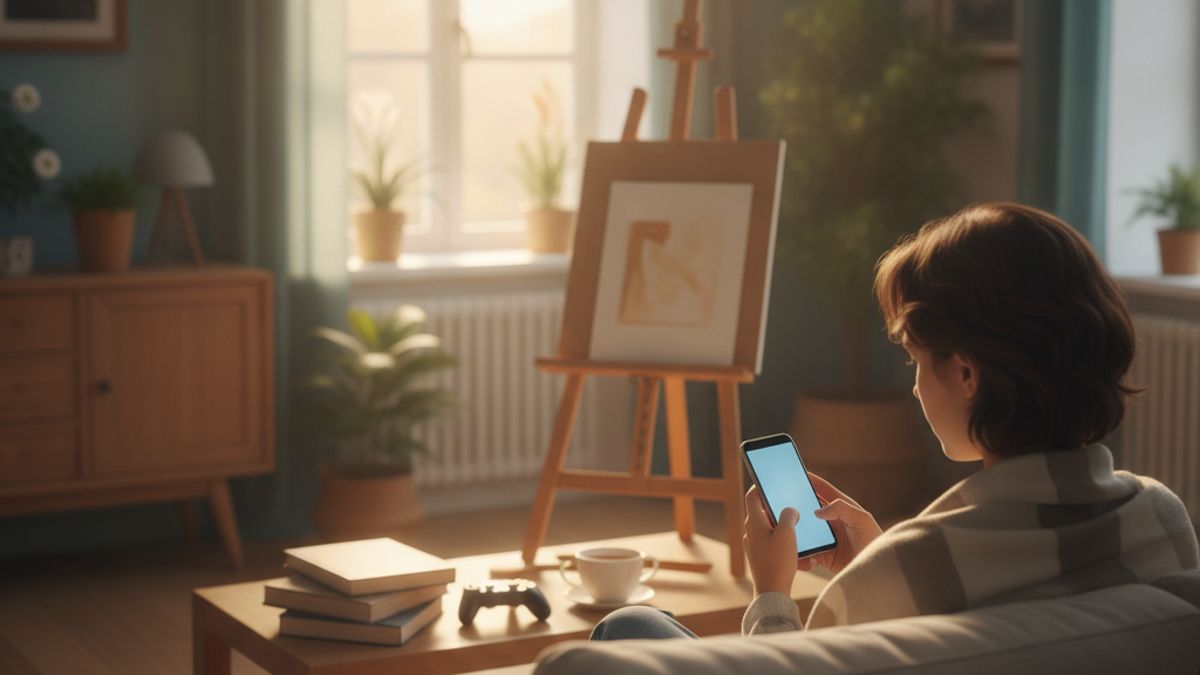
Why do I procrastinate things I enjoy? Understanding leisure procrastination

You procrastinate things you enjoy because your brain views the effort required to transition into the activity as more demanding than the anticipated pleasure, often triggered by mental exhaustion, perfectionism, or underlying executive dysfunction.
It is a highly frustrating paradox. You have a free evening, you have been looking forward to painting, playing a video game, or reading a novel all week, but when the time finally arrives, you find yourself doom-scrolling on your phone instead. Unlike times when you have no motivation to work, here you are not avoiding a difficult work project or a challenging household chore. You are actively avoiding your own leisure time.
This phenomenon, often referred to as leisure procrastination, can leave you feeling guilty, empty, and confused. If you frequently catch yourself wondering why you procrastinate things you enjoy, it is vital to understand that this is not a personal failing or a sign of laziness. It is a complex psychological response to modern life, stress, and the way your brain processes energy and reward.
In this comprehensive guide, we will explore the cognitive, emotional, and systemic reasons behind why we avoid our hobbies. We will also look at actionable, therapy-backed strategies to help you break the cycle of avoidance and start experiencing joy in your free time once again.
Contents
- The cognitive friction of task initiation
- Executive dysfunction and the brain manager
- Active versus passive leisure
- The hidden burden of perfectionism in hobbies
- Occupational burnout and decision fatigue
- Revenge bedtime procrastination
- How ADHD impacts leisure and reward
- How to stop when you procrastinate things you enjoy
- Finding professional support in the UK
- Conclusion and next steps
The cognitive friction of task initiation
To understand why we avoid our favourite pastimes, we must first look at the concept of task initiation. This is the neurological process of beginning an activity. Your brain is constantly running a subconscious cost-benefit analysis before you take any action. It weighs the amount of energy required to start a task against the expected reward.
Even if an activity is enjoyable, the transition phase requires a burst of cognitive energy. Getting your painting supplies out, setting up your gaming console, or even choosing which book to read all require active effort. When your overall energy levels are depleted, your brain registers this minor transition effort as a monumental barrier, which is a very common experience if you are currently figuring out how to deal with burnout in a stressful workplace.
Research suggests that dopamine levels can rise by up to 150 percent during the anticipation of a highly rewarding task, but this spike only occurs if the brain believes the reward is easily accessible. If the perceived cognitive friction is too high, the dopamine response is blunted, leaving you without the chemical motivation required to start.
This explains why you might spend two hours watching random videos instead of engaging in a hobby you genuinely love. The videos require zero task initiation energy. Your brain is simply taking the path of least resistance to secure a steady, albeit less satisfying, drip of dopamine.
Executive dysfunction and the brain manager
Sometimes, the inability to start an enjoyable task stems from executive dysfunction. Executive functions are the cognitive processes managed by the frontal lobe of the brain. They act like a project manager, helping you plan, focus, remember instructions, and juggle multiple tasks successfully.
When this cognitive project manager goes on strike, even simple, enjoyable activities become overwhelming. You might stare at your craft supplies, knowing exactly what you want to make, but feel physically incapable of making your hands move to begin. This is a common experience for neurodivergent individuals, but it can also be triggered by severe stress, trauma, or depression.
Executive dysfunction typically impacts several specific areas of cognition that directly affect leisure:
- Working memory: The ability to hold information in your mind while completing a task, which is essential for following a recipe or learning a new piece of music.
- Cognitive flexibility: The capacity to switch gears from a demanding workday to a relaxed evening state.
- Inhibitory control: The power to ignore immediate, low-effort distractions (like your smartphone) in favour of deeper, more rewarding engagement.
- Task initiation: The specific mechanism required to cross the threshold from thinking about doing something to actually doing it.
If you suspect that your difficulties extend beyond simple tiredness and into the realm of executive dysfunction, taking a validated self-assessment can be a helpful first step. You might want to explore an ASRS adult ADHD screener or a general procrastination test to better understand your cognitive patterns.
Active versus passive leisure
It is crucial to distinguish between active and passive leisure when examining why you procrastinate things you enjoy. Passive leisure involves activities that require almost no cognitive input. Watching television, listening to a podcast, or scrolling through social media are prime examples. You are simply receiving information.
Active leisure, on the other hand, requires participation. Knitting, writing, playing an instrument, gardening, or playing a strategic video game all demand focus, physical coordination, and problem-solving. These activities are ultimately much more fulfilling and restorative, but they require a completely different energy expenditure.
At the end of a long day, your cognitive reserves are often entirely depleted. You might deeply desire the profound satisfaction of active leisure, but your nervous system is demanding the immediate recovery offered by passive leisure. Recognising this difference helps remove the guilt associated with avoiding your hobbies.
You are not broken for choosing the sofa over your sketchbook. Your brain is simply trying to protect its remaining resources. The goal is not to force yourself into exhaustion, but to find gentle ways to bridge the gap between active and passive states.
The hidden burden of perfectionism in hobbies
Another major reason people avoid their hobbies is the insidious creep of perfectionism. In a culture obsessed with productivity and side hustles, we often internalise the idea that our leisure time must also be productive, impressive, or perfectly executed. We forget how to be bad at things just for the fun of it.
If you enjoy painting but constantly criticise your own brushstrokes, painting ceases to be a relaxing hobby. It becomes another arena for self-judgement. If you love reading but set a rigid goal to read fifty books this year, reading becomes a chore governed by metrics rather than a joyful escape.
This performance pressure creates anxiety. When an activity produces anxiety, the brain naturally wants to avoid it. You end up procrastinating the hobby because the emotional cost of facing your own unrealistic standards is too high.
Overcoming this requires a deliberate practice of self-compassion. You must grant yourself permission to create ugly art, to play wrong notes, and to read slowly. If perfectionism is a recurring theme in your life, you might find our guide on Overcoming low self esteem and insecurity: A guide to building self-worth particularly helpful for reframing these internal expectations.
Occupational burnout and decision fatigue
For many adults, the inability to engage in leisure is a direct symptom of occupational burnout. Burnout is not just feeling tired; it is a state of physical, emotional, and mental exhaustion caused by prolonged stress. It alters your nervous system, keeping you in a state of chronic fight-or-flight.
When you are burnt out, your brain limits energy expenditure strictly to survival and essential duties. You can force yourself to go to work, pay the bills, and feed your family, but the moment those obligations are met, your system forces a shutdown. There is simply no fuel left in the tank for hobbies.
Coupled with burnout is decision fatigue. Many modern jobs require us to make hundreds of micro-decisions every single day. By the time the evening arrives, the mere thought of deciding which video game to play or what colours to use in a craft project is overwhelmingly exhausting.
If you feel completely drained and unable to muster motivation for even your favourite activities, it is worth exploring whether work stress is the root cause. You can assess your current stress levels using the BAT-12 burnout test. Additionally, reading about Why you have no motivation to work and how to get it back can provide insight into how professional exhaustion bleeds into personal time.
Sometimes, leaving a stressful environment is not immediately possible. In those cases, learning How to deal with burnout when you can't quit your job is essential for protecting your remaining mental energy.
Revenge bedtime procrastination
A specific and highly common form of leisure avoidance is revenge bedtime procrastination. This occurs when people who feel they have no control over their daytime hours refuse to go to sleep early in order to regain a sense of freedom during the night.
Revenge bedtime procrastination is a recognised behaviour, with studies indicating that up to 73 percent of high-stress workers engage in it regularly. Instead of using this stolen night-time for fulfilling hobbies, people typically spend it on low-effort, passive activities like mindlessly browsing the internet.
The tragedy of this cycle is that it robs you twice. First, it robs you of the restorative sleep you desperately need. Second, it fails to provide the genuine joy and relaxation that true, active leisure would offer. You stay up late feeling rebellious, but you wake up exhausted and even less equipped to engage in your hobbies the following day.
Breaking this cycle requires setting firm boundaries around your work and daytime obligations, ensuring you carve out small, non-negotiable pockets of time for yourself before the sun goes down, thereby reducing the desperate need to steal time back from the night.
How ADHD impacts leisure and reward
It is impossible to discuss leisure procrastination without addressing neurodivergence, particularly Attention Deficit Hyperactivity Disorder. Adult ADHD is estimated to affect around 3 to 4 percent of the UK population, though many remain undiagnosed. The condition fundamentally alters how the brain processes dopamine and reward.
For someone with ADHD, an activity must typically be highly novel, urgently important, or intensely interesting to trigger the dopamine required for task initiation. If a hobby has lost its initial novelty, the ADHD brain may struggle to engage with it, regardless of how much the person genuinely loves the activity.
Furthermore, the diagnostic criteria under the DSM-5 require adults to exhibit at least 5 symptoms of inattention or hyperactivity-impulsivity for a formal diagnosis. Many of these symptoms, such as difficulty organising tasks or feeling easily distracted by extraneous stimuli, make setting up and maintaining a hobby incredibly difficult.
If you find that you cycle through intense obsessions with new hobbies, buying all the equipment only to abandon the activity a few weeks later in favour of passive procrastination, this dopamine-seeking pattern may be at play. Understanding your neurotype is a vital step in learning how to work with your brain rather than against it.
How to stop when you procrastinate things you enjoy
Understanding the root causes of your avoidance is the first step, but how do you actually break the cycle? If you want to stop wondering why you procrastinate things you enjoy, you need to implement practical, low-friction strategies that bypass your brain's resistance.
Here are some of the most effective, evidence-based methods for reclaiming your leisure time:
- The 5-Minute Rule: Give yourself permission to engage in your hobby for exactly five minutes, and then you are allowed to quit. Setting a simple timer for just 5 to 10 minutes lowers the perceived cognitive friction almost to zero. Often, once the transition is complete and the timer rings, you will find you want to keep going.
- Environment Design: Make the right choice the easiest choice. If you want to read more, leave a book on your pillow. If you want to play guitar, leave it on a stand in the living room rather than packed away in a case. Conversely, make passive procrastination harder by placing your television remote in another room or using apps to block social media.
- Habit Stacking: Anchor your hobby to an existing daily routine. For example, tell yourself you will sketch for ten minutes while your morning coffee brews. By attaching the new desired behaviour to an established habit, you remove the need for decision-making.
- Lower the Stakes: Actively fight perfectionism by setting intentionally mediocre goals. Decide that you will write a terrible poem, or play a video game on the easiest setting. Removing the pressure to perform allows the joy of the activity to return.
- The Pomodoro Technique: While traditionally used for work, the Pomodoro Technique involves breaking time into manageable intervals. Dedicate 20 minutes to your hobby, followed by a short break. This structured approach helps bypass executive dysfunction by providing clear boundaries for the task.
Implementing these strategies requires patience. Do not try to adopt all of them at once. Pick one method, experiment with it for a week, and observe how your brain responds to the lowered barriers of entry.
Finding professional support in the UK
If your inability to enjoy your free time is deeply entrenched, or if it is accompanied by feelings of hopelessness, severe anxiety, or chronic burnout, it may be time to seek professional support. Therapy can provide a safe space to untangle the complex emotions surrounding productivity, self-worth, and leisure.
In the UK, there are several therapeutic approaches proven to help with these issues. Cognitive Behavioural Therapy (CBT) is highly effective for identifying and challenging the perfectionist thoughts that ruin your hobbies. Acceptance and Commitment Therapy (ACT) helps you clarify your core values and take action towards a meaningful life, even when difficult emotions or executive dysfunction arise.
You can access support through NHS Talking Therapies, which is a free service, though it is worth noting that NHS Talking Therapies often have waiting lists ranging from 6 to 18 weeks depending on your local trust. Because of these wait times, many individuals choose to seek private therapy for faster, more specialised support.
When looking for a private therapist, always ensure they are registered with a recognised professional body, such as the BACP (British Association for Counselling and Psychotherapy), the HCPC (Health and Care Professions Council), or the UKCP (UK Council for Psychotherapy). These bodies ensure your therapist meets strict clinical and ethical standards.
Conclusion and next steps
It is incredibly frustrating to realise that you consistently procrastinate things you enjoy. However, by understanding the mechanics of task initiation, the impact of executive dysfunction, and the heavy toll of modern burnout, you can begin to treat yourself with much-needed compassion. Your brain is not broken; it is simply trying to conserve energy in a highly demanding world.
By lowering the stakes, designing your environment to reduce friction, and recognising the difference between active and passive leisure, you can gently coax yourself back into the activities that bring you joy. Leisure should be a sanctuary, not another source of guilt.
If you feel overwhelmed and unable to break this cycle alone, professional guidance can make all the difference. We encourage you to use our platform to find a therapist who can help you navigate burnout, tackle perfectionism, and rediscover the simple pleasure of your own free time.
How MatchyMatch can help
MatchyMatch is a UK therapist matchmaking platform. We offer FREE Discovery Calls with vetted therapists registered with HCPC, BACP, BPS or UKCP - until you find the right fit.
- FREE Discovery Calls - meet as many therapists as you need to find the right one
- Therapists registered with HCPC, BACP, BPS or UKCP - verified before they join
- Online sessions across the UK, plus in-person where available
- Take the quiz and we'll handpick a shortlist for you in minutes
Rate your relationship for free
The CSI-32 test gives you an objective view of how you feel about your couple right now.
Want more support?
Speak with a UK-based therapist who can help you work through what's coming up - first discovery call is free.
Find a therapist