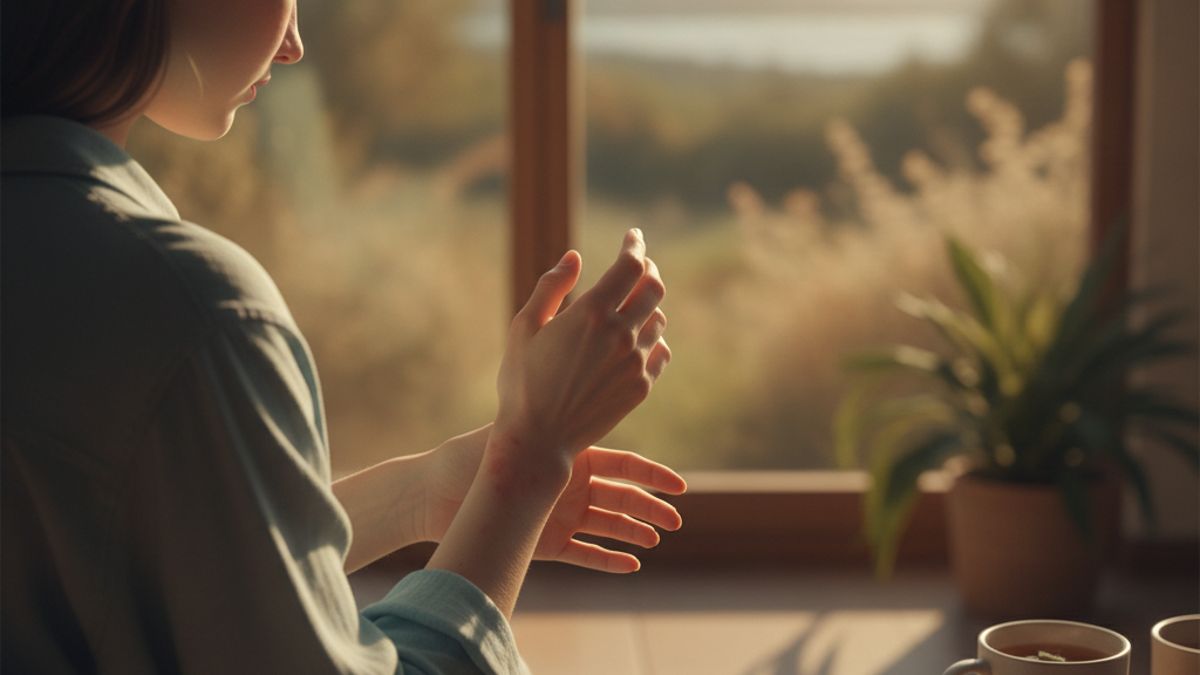
Why anxiety makes me itchy: understanding and treating psychogenic pruritus

Anxiety makes me itchy because the body releases stress hormones like cortisol and histamine during the fight-or-flight response, which triggers nerve endings in the skin and leads to a physical itching sensation known as psychogenic pruritus.
When you feel overwhelmed, your brain communicates this distress directly to your body. The skin and the central nervous system are closely connected, having developed from the same basic cells during early embryonic growth. This intimate biological relationship means that psychological stress frequently manifests as dermatological symptoms. If you have ever felt a sudden need to scratch your arms before a major presentation or noticed a rash during a particularly difficult week, you are not alone. Many people experience physical skin reactions purely as a result of psychological tension.
Understanding this mind-skin connection, a field known as psychodermatology, is the first step toward finding relief. You cannot simply ignore the sensation, nor can you easily switch off your anxiety on command. However, by recognising the physiological mechanics behind your symptoms, you can start to address both the mental triggers and the physical discomfort. This guide explores the science behind anxiety-induced itching, the common conditions it exacerbates, and the practical, evidence-based treatments available in the UK to help you regain control.
Contents
- The science behind why anxiety makes me itchy
- What anxiety itching actually feels like
- Understanding the itch-anxiety cycle
- Common skin conditions triggered by psychological stress
- Medical and psychological treatments for psychogenic pruritus
- Practical ways to stop scratching right now
- When to see a doctor or a therapist
The science behind why anxiety makes me itchy
To understand why anxiety causes physical itching, we have to look at the human nervous system. When you experience fear, worry, or chronic stress, your brain activates the sympathetic nervous system. This is the pathway responsible for your fight-or-flight response. Your body prepares to defend itself against a perceived threat by releasing a cascade of chemicals, including adrenaline and cortisol. While this response is incredibly useful for escaping immediate physical danger, it is highly disruptive when triggered by everyday worries like work deadlines, relationship issues, or financial strain.
One of the key chemicals released during a state of high anxiety is histamine. You might recognise histamine from allergy medications, but your body also produces it naturally in response to stress. Mast cells, which are immune cells residing in your skin, become destabilised by stress hormones. When these mast cells break open, they flood the surrounding tissue with histamine and other inflammatory markers. This sudden influx of chemicals irritates the nerve endings in your epidermis, sending urgent itch signals back up your spinal cord to your brain.
Furthermore, chronic stress severely impacts the protective barrier function of your skin. High levels of cortisol over prolonged periods reduce the skin's ability to retain moisture and defend against external irritants. Dry skin is inherently more prone to itching, creating a perfect storm when combined with an activated nervous system. This is why you might notice that during periods of intense emotional strain, your skin feels tighter, drier, and far more sensitive to the touch than usual.
The central nervous system itself also becomes hypersensitive. When you are anxious, your brain is on high alert, constantly scanning for danger. This state of hypervigilance means that your brain can misinterpret normal, benign sensations, such as the brush of a shirt against your arm or a slight change in room temperature, as threatening stimuli. Your mind registers these subtle physical cues as an itch that demands immediate scratching, demonstrating just how powerfully anxiety can alter sensory perception.
What anxiety itching actually feels like
Anxiety-induced itching can present itself in several different ways, and it often feels quite distinct from an insect bite or a standard allergic reaction. For many individuals, the sensation is described as a sudden, intense prickling or burning feeling that moves across different parts of the body. You might feel an uncontrollable urge to scratch your neck, arms, chest, or scalp. Unlike a mosquito bite, which has a clear, localised centre, psychogenic pruritus can feel widespread and migratory, shifting from one area to another as you try to soothe it.
Some people experience a highly distressing symptom known clinically as formication. This is a specific type of tactile hallucination where it feels exactly as though small insects are crawling on or just underneath the surface of the skin. This sensation can be incredibly overwhelming and often leads to severe, damaging scratching. It is a direct result of sensory nerves firing inappropriately due to a heightened state of psychological arousal, and it is a known symptom of severe anxiety and panic disorders.
The timing of the itch is also a significant indicator of its psychological origins. Many people report that their symptoms worsen significantly in the evening or right before bed. During the day, you are often distracted by work, social interactions, and daily chores. When you finally lie down to sleep, the lack of external distraction allows your brain to focus entirely on internal physical sensations and circulating worries. This quiet time can trigger a spike in anxiety, prompting the nervous system to initiate a fierce episode of itching.
It is common to find that scratching an anxiety itch does not provide the same temporary relief that scratching a normal itch does. In fact, scratching often makes the area feel more sensitive, raw, and inflamed, yet the internal urge to scratch remains entirely unsatisfied. This lack of resolution can heighten your emotional distress, leaving you feeling frustrated and helpless. Recognising these specific patterns is a crucial step in separating an anxiety symptom from a purely dermatological issue.
Understanding the itch-anxiety cycle
One of the most challenging aspects of psychogenic pruritus is the vicious cycle it creates between your mind and your body. The process begins with a psychological stressor that triggers a physical itch. Naturally, your immediate physical response is to scratch the affected area. However, scratching provides only a fleeting moment of distraction before the friction irritates the skin further, causing minor damage to the epidermal layer and prompting the release of even more inflammatory chemicals like histamine.
As the physical sensation intensifies, so does your emotional reaction to it. The persistence of the itch becomes a new source of profound frustration and distress. You might start worrying about what is wrong with your skin, fearing that you have a severe medical condition, or feeling embarrassed about scratching in public. This secondary anxiety triggers further stress responses in the brain, dumping more cortisol into your system and perpetuating the very physical symptoms you are desperate to stop. The symptom itself becomes the trigger.
This cycle is particularly prevalent in individuals dealing with complex emotional challenges. For instance, people struggling with high-functioning anxiety often suppress their emotional distress to maintain a facade of competence at work or at home. Because the emotional outlet is blocked, the nervous system forces the stress to manifest physically through the skin. It is the body's way of demanding attention when psychological needs are being ignored.
Breaking this cycle requires a dual approach. You must soothe the physical irritation while simultaneously addressing the underlying nervous system dysregulation. If you only treat the skin with creams without looking at the anxiety, the symptoms will inevitably return the next time you face a stressful situation. Similarly, managing other physical stress responses is crucial, as the body often presents multiple symptoms at once. You might notice overlapping issues, and reading about how anxiety impacts appetite can provide further insight into the powerful ways mental health dictates physical wellbeing.
Common skin conditions triggered by psychological stress
While anxiety can cause itching on completely healthy skin, it is also a major trigger for flare-ups in pre-existing dermatological conditions. The interaction between stress hormones and the immune system means that if you are genetically predisposed to certain skin issues, anxiety will almost certainly make them worse. Understanding the specific conditions that respond heavily to psychological stress can help you and your general practitioner tailor a more effective treatment plan.
Several well-documented skin conditions are known to be heavily influenced by the patient's emotional state. When stress compromises the immune system and the skin barrier, chronic inflammation takes hold. Here are some of the most common physical skin conditions that are explicitly triggered or worsened by anxiety:
- Atopic Dermatitis (Eczema): Stress increases cortisol, which dries out the skin and impairs its barrier function, making eczema patches redder, angrier, and intensely itchy during periods of high anxiety.
- Urticaria (Hives): Acute stress can cause mast cells to release massive amounts of histamine, resulting in raised, incredibly itchy welts that appear suddenly across the body.
- Psoriasis: This autoimmune condition is heavily linked to psychological stress, with anxiety acting as a primary catalyst for the overproduction of skin cells, leading to thick, scaly, and itchy plaques.
- Acne Excoriee: A condition where minor blemishes or even healthy skin are obsessively picked and scratched due to anxiety, leading to sores, scarring, and significant psychological distress.
If you suffer from any of these conditions, you have likely noticed the correlation between your mental health and your skin health. A difficult week at work or a stressful family event often precedes a severe flare-up. Treating these conditions solely with topical steroids or moisturisers is often inadequate if the underlying psychological load is ignored. The inflammation is being driven from the inside out.
This is why modern medicine increasingly encourages a holistic approach. General practitioners in the UK are trained to look for psychological components in chronic skin conditions. By managing your anxiety, you are actively reducing the inflammatory burden on your immune system, which in turn gives your skin the necessary environment to heal and regenerate without constant interruption from stress hormones.
Medical and psychological treatments for psychogenic pruritus
When the root cause of your physical discomfort is psychological, the most effective, long-term solutions are found in therapy and mental health support. The National Institute for Health and Care Excellence (NICE) provides guidelines for treating anxiety disorders, which often resolve associated physical symptoms like psychogenic pruritus. Accessing the right kind of support can break the cycle of stress, histamine release, and scratching.
For many, talking therapy is the foundation of recovery. Working with a therapist registered with a professional body, such as the British Association for Counselling and Psychotherapy (BACP) or the Health and Care Professions Council (HCPC), ensures you receive evidence-based care. There are specific modalities of therapy that are highly effective for treating both the overarching anxiety and the specific behavioural symptom of compulsive scratching.
The most widely recommended therapeutic approaches for addressing the link between anxiety and physical symptoms include:
- Cognitive Behavioural Therapy (CBT): Helps you identify and challenge the catastrophic thought patterns that spike your anxiety, ultimately lowering your baseline stress levels and reducing physical symptoms.
- Habit Reversal Training (HRT): A specific behavioural therapy often used for skin-picking or chronic scratching, teaching you to recognise the urge to scratch and replace it with a harmless, competing physical action.
- Mindfulness-Based Stress Reduction (MBSR): An approach that trains you to stay grounded in the present moment, teaching you to observe the sensation of an itch without immediately reacting to it or panicking.
- Acceptance and Commitment Therapy (ACT): Focuses on accepting uncomfortable physical sensations without letting them dictate your behaviour, reducing the emotional suffering associated with chronic itching.
A standard course of Cognitive Behavioural Therapy for anxiety typically involves 8 to 12 weekly sessions to effectively rewire your stress response. During these sessions, you will learn practical skills to downregulate your nervous system. In the UK, you can access these treatments through NHS Talking Therapies or by choosing to find a private therapist if you prefer shorter waiting times and more specialised approaches.
In some severe cases, a doctor may prescribe medication alongside psychological therapy. Antihistamines can provide temporary relief from the physical itch, while selective serotonin reuptake inhibitors (SSRIs) are sometimes prescribed to manage the underlying anxiety disorder. However, medication is most effective when used in conjunction with therapy, as therapy provides the tools needed to manage stress independently in the long term.
Practical ways to stop scratching right now
While therapy provides the long-term solution, you also need immediate strategies to manage the overwhelming urge to scratch when an anxiety spike hits. Distracting the brain and cooling the nerve endings are the most effective ways to break the acute cycle. When you feel the familiar prickle of an anxiety itch, the goal is to intervene before you break the skin and cause further inflammation.
Temperature therapy is highly effective for immediate relief. Applying a cold pack to the affected area for 10 to 15 minutes can numb the nerve endings and disrupt the itch signal. The brain can only process a certain amount of sensory information at once, and the intense sensation of cold will often override the sensation of itching. You can use a bag of frozen peas wrapped in a tea towel, a chilled gel pack, or even a cold, damp flannel.
Breathing exercises are essential for calming the physiological panic that accompanies the itch. Taking just 5 minutes to practice diaphragmatic breathing can significantly lower your heart rate and reduce the production of stress hormones. Try the 4-7-8 method: inhale deeply through your nose for four seconds, hold the breath for seven seconds, and exhale slowly through your mouth for eight seconds. This signals to your parasympathetic nervous system that you are safe, helping to turn off the fight-or-flight response.
Finally, employ physical barriers and alternative actions. If you find yourself scratching unconsciously, particularly at night, keeping your nails trimmed short and wearing soft cotton gloves can prevent skin damage. During the day, keep your hands busy with a stress ball, a piece of tactile jewellery, or a fidget toy. By keeping your hands occupied and your skin protected, you buy yourself the time needed for your anxiety levels to drop and the physical urge to subside.
When to see a doctor or a therapist
It is important to know when to escalate your symptoms to a healthcare professional. Occasional itching before a stressful event is a normal quirk of the human nervous system. However, if your physical symptoms are severely impacting your quality of life, interrupting your sleep, or causing you to damage your skin, it is time to seek professional intervention.
As a general rule, if your symptoms persist daily for more than 6 weeks, it is clinically classified as chronic pruritus and warrants a medical evaluation. Your first step should be consulting your general practitioner. A typical initial consultation with a general practitioner usually lasts about 10 minutes, so it helps to write down your symptoms beforehand. They can rule out underlying physical conditions, such as liver or kidney issues, and help confirm whether anxiety is the primary driver.
If psychological stress is the clear cause, pursuing structured support is crucial. You might want to begin by taking a validated screening tool, such as the GAD-7 anxiety test, to help quantify your symptoms before speaking to a professional. Once you are ready to tackle the root cause, you can explore comprehensive therapy for anxiety to help you reclaim your physical and mental comfort. The mind-body connection is powerful, but with the right guidance, it is entirely possible to restore balance to your nervous system and soothe your skin.
How MatchyMatch can help
MatchyMatch is a UK therapist matchmaking platform. We offer FREE Discovery Calls with vetted therapists registered with HCPC, BACP, BPS or UKCP - until you find the right fit.
- FREE Discovery Calls - meet as many therapists as you need to find the right one
- Therapists registered with HCPC, BACP, BPS or UKCP - verified before they join
- Online sessions across the UK, plus in-person where available
- Take the quiz and we'll handpick a shortlist for you in minutes
Rate your relationship for free
The CSI-32 test gives you an objective view of how you feel about your couple right now.
Want more support?
Speak with a UK-based therapist who can help you work through what's coming up - first discovery call is free.
Find a therapist